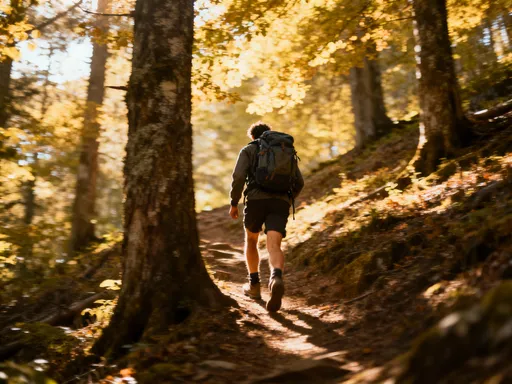
Why Hiking Changed My Health Without Any Gym Membership
What if the best workout wasn’t in a gym but on a trail? I started hiking to escape stress, not to get fit—but something unexpected happened. My energy soared, my mind cleared, and my body changed. No reps, no routines—just walking uphill. Turns out, nature doesn’t just heal your mood; it reshapes your health. Let’s talk about how something so simple became my most powerful wellness habit. While gyms offer structure, hiking offers integration—of movement, mindset, and environment. For many women between 30 and 55 juggling family, work, and personal well-being, this form of exercise feels less like a chore and more like a quiet promise to oneself. It doesn’t demand perfection, just presence. And in that simplicity lies its strength.
The Hidden Power of Walking Uphill
At first glance, hiking might seem like nothing more than walking with a view. But the reality is far more transformative. Unlike flat-surface walking or treadmill cardio, hiking involves natural resistance from uphill climbs, uneven terrain, and environmental challenges like wind or loose gravel. These variables force the body to adapt continuously, engaging muscles in ways that predictable gym machines simply cannot replicate. The result is a full-body workout disguised as exploration—one that builds endurance without monotony.
When you walk uphill, your glutes, quadriceps, hamstrings, and calves work harder to lift your body against gravity. This increased demand raises your heart rate into a healthy aerobic zone, improving cardiovascular efficiency over time. But unlike high-impact exercises such as running, hiking is low on joint stress because the incline reduces the force of footstrike. This makes it an ideal option for those managing weight, recovering from injury, or seeking sustainable movement as they age. Additionally, the constant micro-adjustments required on rocky or sloped paths enhance proprioception—the body’s ability to sense its position in space—leading to better balance and coordination.
Scientific research supports these benefits. A study published in the Journal of Applied Physiology found that walking on a 10% incline significantly increases calorie expenditure and muscle activation compared to level ground walking. Moreover, the varied terrain naturally incorporates intervals: short bursts of effort during climbs followed by recovery on descents. This mimics high-intensity interval training (HIIT), known for boosting metabolism and improving insulin sensitivity, yet without the physical strain often associated with structured workouts. For women navigating hormonal shifts during perimenopause or menopause, this kind of gentle metabolic stimulation can be especially beneficial.
The key difference lies in sustainability. Gym routines often rely on motivation, discipline, and time—three resources many busy women find scarce. Hiking, by contrast, integrates physical exertion into an experience. The focus shifts from “burning calories” to “reaching the next ridge” or “seeing the waterfall.” This subtle reframing reduces the psychological burden of exercise, making consistency easier. Over time, the body becomes stronger not because of forced repetition, but because of repeated exposure to real-world physical demands. Nature doesn’t require a fitness tracker; it simply asks you to move.
Mental Clarity Found on the Trail
Beyond the physical transformation, one of the most profound changes many hikers report is mental clarity. In a world saturated with digital noise—emails, notifications, social media feeds—the forest trail offers a rare kind of silence. Not total silence, of course, but the soothing sounds of rustling leaves, distant bird calls, and wind through the trees. This auditory shift alone helps lower stress levels, allowing the mind to reset in ways that meditation or screen-based relaxation rarely achieve.
Studies in environmental psychology have consistently shown that spending time in green spaces reduces cortisol, the body’s primary stress hormone. One notable study conducted by Stanford University revealed that participants who walked for 90 minutes in a natural setting showed reduced activity in the subgenual prefrontal cortex—a brain region linked to rumination and negative self-thought—compared to those who walked in an urban environment. This suggests that nature doesn’t just distract us from stress; it actively reshapes our brain’s response to it. For women managing household responsibilities, caregiving duties, or career pressures, this kind of neurological reset can be invaluable.
The rhythmic nature of hiking also plays a crucial role. With each step, breathing deepens, heart rate stabilizes, and the body enters a meditative state similar to mindfulness practices. There’s no need to “try” to relax; the act of moving through nature does it for you. Solitude, when welcomed, amplifies this effect. Without the pressure to perform or respond, the mind begins to untangle knots of worry, resentment, or fatigue. Many women describe reaching a point on the trail where a decision they’d been avoiding suddenly becomes clear, or a long-held emotion surfaces and releases. These aren’t mystical experiences—they’re the natural outcomes of giving the brain space to breathe.
Additionally, hiking removes the constant visual stimulation of screens. The average adult spends over seven hours a day looking at digital devices, a habit linked to increased anxiety, poor sleep, and reduced attention span. Replacing even a fraction of that time with trail time allows the nervous system to downshift from “fight-or-flight” to “rest-and-digest” mode. This isn’t just about feeling calmer in the moment; it’s about building long-term emotional resilience. When challenges arise at home or work, the memory of standing atop a ridge, wind in your hair and lungs full of fresh air, becomes a mental anchor—a reminder that peace is possible, even when life feels overwhelming.
Hiking as Preventive Health Care
Most people think of healthcare as something reactive: visiting a doctor when symptoms appear, taking medication when numbers rise. But true wellness is preventive—and hiking offers one of the most accessible forms of disease prevention available. Regular trail walking has been linked to lower blood pressure, improved cholesterol profiles, and better glucose regulation. These aren’t minor improvements; they’re foundational shifts that reduce the risk of chronic conditions like heart disease, type 2 diabetes, and stroke—three leading causes of death among women over 40.
A large-scale study published in the British Journal of Sports Medicine followed over 100,000 adults and found that those who engaged in regular outdoor walking had a 20% lower risk of cardiovascular events compared to sedentary individuals. The benefits were even greater for those who walked on varied terrain, suggesting that hiking’s unique combination of elevation change and natural resistance provides superior protection. What’s more, these results were achieved through moderate, consistent effort—not extreme exertion. This is critical for women who may feel intimidated by intense fitness regimens or discouraged by past failures.
The power of consistency cannot be overstated. While a single hour-long hike won’t reverse years of inactivity, doing it weekly—or even biweekly—creates cumulative benefits. The body adapts gradually: arteries become more elastic, insulin sensitivity improves, and inflammation markers decrease. These changes happen silently, beneath the surface, yet they shape long-term health more than any short-term diet or detox ever could. Unlike fad workouts that promise quick results but fade from routine, hiking integrates into life. It doesn’t require special equipment, memberships, or perfect weather. A 30-minute walk in a local park counts. So does a weekend trail adventure.
Another advantage is inclusivity. Hiking meets people where they are. Whether you’re recovering from surgery, managing arthritis, or simply out of shape, trails offer options. Many parks feature paved or gravel paths with gentle slopes, making them suitable for beginners or those with mobility concerns. As fitness improves, hikers can gradually choose steeper or longer routes. This scalability ensures that hiking remains relevant across decades. A woman in her 30s can start with short woodland walks; by her 50s, she might be tackling mountain trails with confidence. The journey itself becomes a testament to resilience, not just physically, but emotionally and mentally.
What Your Body Actually Gains (And Why It Lasts)
The physical transformations from hiking go far beyond weight loss or stamina. Over time, the body develops specific adaptations that contribute to lifelong strength and stability. One of the most noticeable changes is in the lower body. Uphill walking powerfully engages the glutes—the largest muscle group in the body—which often become underused due to prolonged sitting. Strong glutes support pelvic alignment, reduce lower back pain, and improve posture. Similarly, the hamstrings and calves gain endurance, making everyday activities like climbing stairs or carrying groceries feel effortless.
Equally important is core engagement. On uneven terrain, the body instinctively activates deep abdominal muscles to maintain balance. Unlike sit-ups or planks, which isolate the core, hiking strengthens it functionally—through real movement. This leads to better spinal support and reduced risk of injury. Over time, hikers often notice they stand taller, move with more confidence, and experience fewer aches after long days. These are not vanity metrics; they’re indicators of a body that functions well.
Bone health is another critical benefit, especially for women. After age 35, bone density begins to decline, accelerating during menopause due to decreasing estrogen levels. Weight-bearing activities like hiking stimulate bone remodeling, helping to maintain strength and reduce the risk of osteoporosis. Unlike swimming or cycling, which are excellent for cardio but non-weight-bearing, hiking forces bones to bear load in a natural, rhythmic way. This gentle stress signals the body to reinforce bone structure, making it a powerful ally in long-term skeletal health.
Perhaps the most significant advantage is sustainability. Fad diets and extreme workouts often lead to burnout, injury, or rebound weight gain. Hiking, by contrast, fosters gradual, lasting change. Because it’s enjoyable, social, and adaptable, people stick with it. The motivation isn’t rooted in appearance but in how it makes them feel—alive, capable, connected. This emotional connection transforms hiking from a “workout” into a lifestyle. And when movement becomes part of identity—when you start thinking, I’m someone who walks in nature—the habit sticks. That’s when real health takes root.
Common Mistakes That Undermine Results
Despite its simplicity, hiking isn’t without pitfalls. Many beginners make mistakes that reduce enjoyment or increase injury risk. One of the most common is wearing improper footwear. Sneakers or flat shoes lack the ankle support and tread needed for trails, leading to slips, blisters, or sprains. Investing in a good pair of hiking shoes or boots—ones that fit well and provide traction—is essential. Similarly, overpacking is a frequent issue. Carrying a heavy backpack strains the shoulders and lower back, negating many of hiking’s benefits. A lightweight daypack with water, snacks, and a rain jacket is usually sufficient.
Another mistake is pushing too hard too soon. Eager to see results, some hikers choose trails beyond their fitness level, leading to exhaustion or soreness that discourages future outings. It’s better to start small—on flat, short trails—and gradually increase distance and elevation. Listening to your body is crucial. Fatigue is normal; sharp pain is not. Rest when needed. Take breaks. Hydrate. These aren’t signs of weakness; they’re acts of wisdom.
Weather and terrain are also often underestimated. A sunny morning can turn rainy by afternoon. Trails may be muddy, icy, or rocky. Checking conditions beforehand and dressing in layers—moisture-wicking base, insulating mid, and waterproof outer—helps ensure safety and comfort. Trekking poles, often overlooked, can significantly reduce strain on knees, especially during descents. They also improve balance on slippery or uneven ground, making hiking accessible even for those with joint concerns.
Finally, many overlook the importance of pacing. Hiking isn’t a race. The goal isn’t to finish fastest but to arrive feeling strong. Slowing down allows for deeper breathing, better appreciation of surroundings, and reduced injury risk. It also makes the experience more meditative. By avoiding these common errors, hikers set themselves up for long-term success—physically, mentally, and emotionally.
How to Start—Even If You Hate “Exercise”
For many women, the word “exercise” carries baggage—memories of gym class, failed resolutions, or uncomfortable workouts. Hiking bypasses that entirely. It doesn’t feel like exercise because it doesn’t follow exercise rules. There’s no clock, no playlist, no instructor shouting “one more rep.” Instead, it offers freedom: to move at your own pace, choose your own path, and enjoy the journey.
The best way to start is simple: pick a short trail near home. Local parks, nature reserves, or even tree-lined suburban paths count. Begin with 20 to 30 minutes. Focus on how your body feels, not how many calories you burn. Bring a friend if it helps—conversation makes time fly. Or go alone, if solitude appeals. There’s no wrong way to do it. Apps like AllTrails or Hiking Project can help locate beginner-friendly routes with reviews and photos, reducing uncertainty.
Motivation grows with experience. At first, the goal might be just to finish the trail. Soon, it becomes about reaching a viewpoint, spotting wildlife, or completing a longer route. Progress doesn’t have to be measured in miles or minutes. Notice when stairs feel easier, when energy lasts longer, when stress feels lighter. These are real victories. Celebrate them.
Most importantly, normalize starting slowly. You don’t need special skills or fitness. You just need willingness. Many women who once thought they “weren’t outdoor people” now hike weekly, some even leading group walks. The shift happens not through willpower, but through repeated positive experiences. Each hike builds confidence, curiosity, and connection—to nature, to self, and to a quieter, stronger version of life.
Turning Steps Into a Lifelong Habit
The true power of hiking emerges not in a single outing, but in repetition. When done regularly, it stops being an activity and starts being a way of life. Women who hike consistently often describe a shift in identity: from “I go hiking sometimes” to “I’m someone who moves in nature.” This subtle change is powerful. It means movement is no longer something to schedule or endure—it’s simply part of who you are.
Integrating hiking into life doesn’t require grand gestures. It can be a Saturday morning ritual, a post-work unwind, or a family weekend tradition. Some women keep trail journals, noting routes, weather, and feelings. Others join local hiking groups, finding camaraderie and accountability. Seasonal goals—like seeing fall foliage or spring blooms—add purpose and anticipation. The key is to treat hiking not as a fitness chore, but as a form of daily self-care, as essential as eating well or sleeping enough.
Over time, the trail becomes a mirror. It reflects your energy, your mood, your resilience. Some days you move fast; others, you need to pause. Both are valid. Both are part of the journey. And in that acceptance—of pace, of progress, of imperfection—lies a deeper lesson: that health isn’t about perfection, but presence. Hiking teaches us to show up, one step at a time, for ourselves.
In a world that often demands more—more productivity, more beauty, more achievement—hiking offers the radical act of stepping away. It asks nothing but your attention. It gives back energy, clarity, strength. It doesn’t promise instant transformation, but it delivers lasting change. For women navigating the complex terrain of midlife, it may be the most honest, healing, and sustainable form of wellness available. The trail isn’t just a path through the woods. It’s a path back to yourself.