Why Flexibility Training Is the Secret to Long-Term Body Maintenance
We often chase strength or stamina, but flexibility quietly holds the key to lasting mobility and injury prevention. I used to skip stretching—until stiff mornings and sore muscles made me rethink. What I discovered wasn’t just about touching toes; it was about preserving how my body moves every day. Flexibility training, I realized, isn’t optional—it’s essential body maintenance. It supports joint health, enhances everyday movement, and helps prevent the gradual decline that many mistake for natural aging. The truth is, how well you move at 50, 60, or 70 isn’t just about genetics—it’s about the habits you build now.
The Overlooked Foundation: What Flexibility Really Means
Flexibility is more than how far you can bend or whether you can touch your toes. At its core, it refers to the range of motion available in your joints and the elasticity of your muscles and connective tissues. This range allows you to perform daily tasks with ease—reaching for a high shelf, bending to tie a shoe, or turning to check a blind spot while driving. When flexibility is maintained, movements feel fluid and natural. When it’s lost, even simple actions become strained, increasing the risk of discomfort or injury.
Many people assume flexibility matters only for athletes, dancers, or young individuals. This is a common misconception. In reality, flexibility is a critical component of functional health at every age. As we grow older, our tissues naturally lose some elasticity, but this process accelerates when movement is limited. Without regular stretching, muscles shorten and stiffen, joints become less supple, and posture deteriorates. The result is not just stiffness, but a reduced ability to live independently and actively.
Consider the act of getting up from a chair. It requires hip flexion, spinal mobility, and coordinated muscle engagement. A person with good flexibility performs this motion smoothly, using minimal effort. Someone with tight hamstrings or stiff hips may need to push off with their hands, strain their back, or struggle to rise. Over time, this inefficiency leads to wear and tear on joints and muscles. Flexibility, therefore, is not a luxury—it’s a practical necessity for maintaining autonomy and comfort in daily life.
Why Modern Life Works Against Flexibility
Today’s lifestyle is one of the greatest obstacles to maintaining flexibility. Most adults spend the majority of their day seated—whether at a desk, in a car, or on a sofa. Prolonged sitting, especially with poor posture, causes certain muscles to remain in a shortened position for hours at a time. The hip flexors, for example, tighten when held in a bent position, which can pull the pelvis forward and contribute to lower back pain. Similarly, rounded shoulders from hunching over screens lead to tight chest muscles and weakened upper back muscles, creating imbalances that affect posture and movement.
Research has shown that sedentary behavior is strongly linked to reduced joint mobility and increased muscle stiffness. A study published in the Journal of Aging and Physical Activity found that adults who sit for more than eight hours a day experience significantly lower flexibility in the hamstrings and spine compared to those who are more active. What’s more, the decline happens gradually—so slowly that many people don’t notice until they can no longer perform familiar movements without discomfort.
The problem is compounded by a lack of movement variety. Many daily routines involve repetitive motions—typing, walking short distances, lifting light objects—without the full-range movements that keep joints healthy. Without activities that take muscles through their full length, such as deep squats, overhead reaches, or rotational stretches, the body adapts to a limited range. This adaptation, known as adaptive shortening, means the nervous system begins to treat the shortened muscle length as the new normal, making it harder to regain lost flexibility over time.
Even regular exercise doesn’t always counteract these effects. Someone who walks or jogs daily may have good cardiovascular fitness but still suffer from tight hip flexors or stiff shoulders if stretching is neglected. This disconnect explains why many active individuals still experience stiffness, especially in the mornings or after long periods of inactivity. The body needs more than endurance or strength—it needs length and suppleness to function optimally.
The Science of Stretch: How Your Body Responds
When you stretch, you’re not just pulling on muscles—you’re engaging a complex physiological system. Muscles contain sensory receptors called muscle spindles, which monitor changes in length and tension. When a stretch is introduced too quickly or too forcefully, these spindles trigger a protective reflex that causes the muscle to contract, resisting the stretch. This is why bouncing during a stretch—once commonly recommended—can be counterproductive and even harmful. Instead, slow, sustained stretching allows the nervous system to adapt, gradually reducing resistance and permitting a greater range of motion.
Over time, consistent stretching leads to structural changes in muscle and connective tissue. The collagen fibers in tendons and fascia become more pliable, and muscle fibers themselves can increase in length. This process, known as viscoelastic deformation, is similar to how a rubber band becomes more stretchable after repeated use. Unlike a rubber band, however, the human body also benefits from improved blood flow and nutrient delivery to tissues during and after stretching, which supports healing and regeneration.
The nervous system plays a crucial role in this adaptation. With regular practice, the brain learns to tolerate greater muscle length, effectively “resetting” the perceived safe range of motion. This neurological component explains why flexibility gains take time and consistency—they’re not just physical, but also involve retraining the body’s movement patterns. Think of it like tuning an instrument: each session fine-tunes the body’s ability to move with precision and ease.
Another important factor is the role of connective tissue, particularly fascia—the web-like structure that surrounds muscles, organs, and bones. Fascia can become stiff and adhered due to inactivity, injury, or inflammation. Stretching, especially when combined with movement, helps maintain fascial health by promoting sliding and gliding between tissue layers. This contributes to smoother, more efficient movement and reduces the sensation of internal tightness that many people describe as “being stuck” or “cemented in place.”
Flexibility vs. Mobility: Clearing the Confusion
While often used interchangeably, flexibility and mobility are distinct concepts. Flexibility refers to the passive range of motion—how far a joint can be moved with external assistance, such as using a strap or gravity. Mobility, on the other hand, is the active range of motion—how well you can control movement using your own muscles. For example, someone may be able to lift their leg high when lying down (good flexibility), but struggle to step onto a high curb or climb stairs with control (poor mobility).
Both are essential for long-term body maintenance. High flexibility without adequate strength and control can lead to joint instability, while good mobility requires both muscle elasticity and neuromuscular coordination. Imagine carrying groceries up a flight of stairs: you need flexible hamstrings to bend and reach, mobile hips to step up, and strong stabilizing muscles to maintain balance. If any of these components are lacking, the task becomes harder and riskier.
Training should therefore aim to develop both qualities. Static stretching improves flexibility by lengthening tissues, while dynamic movements and strength exercises enhance mobility by teaching the body to use that range effectively. A balanced routine includes both passive stretches and active movements that challenge control, such as lunges with rotation, controlled leg lifts, or yoga poses that require balance and engagement.
For middle-aged and older adults, this balance is especially important. As muscle mass and neuromuscular efficiency decline with age, maintaining mobility becomes key to preventing falls and preserving independence. Flexibility alone won’t prevent a stumble, but when combined with strength and coordination, it contributes to safer, more confident movement. The goal is not extreme flexibility, but functional capacity—the ability to move well in real-life situations.
Proven Methods That Actually Work
Not all stretching is equally effective. Research supports several evidence-based techniques that, when performed correctly, lead to measurable improvements in flexibility and joint function. The most widely recommended methods include static stretching, dynamic warm-ups, and proprioceptive neuromuscular facilitation (PNF). Each has a specific role and optimal timing within a fitness routine.
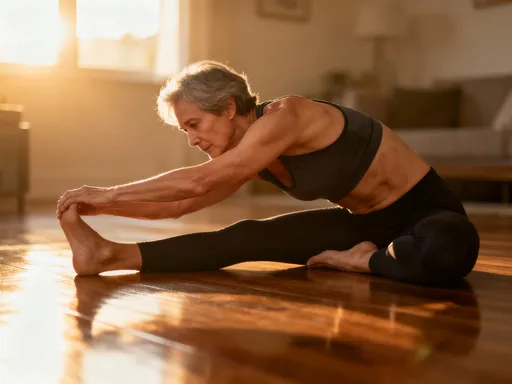
Static stretching involves holding a stretch in a fixed position for 20 to 60 seconds. It’s most effective after exercise or at the end of the day when muscles are warm. Studies show that consistent static stretching—performed at least three to five times per week—can significantly improve range of motion over time. Common examples include seated forward bends for the hamstrings, standing quad stretches, and shoulder crosses. The key is to stretch to the point of mild tension, not pain, and to breathe deeply to help relax the muscle.
Dynamic stretching, in contrast, involves moving through a range of motion in a controlled way. It’s ideal as part of a warm-up before physical activity. Examples include leg swings, arm circles, and torso rotations. Unlike static stretching before exercise—which can temporarily reduce muscle power—dynamic stretching prepares the body for movement by increasing blood flow, activating muscles, and improving neuromuscular coordination. It bridges the gap between flexibility and mobility by integrating motion with control.
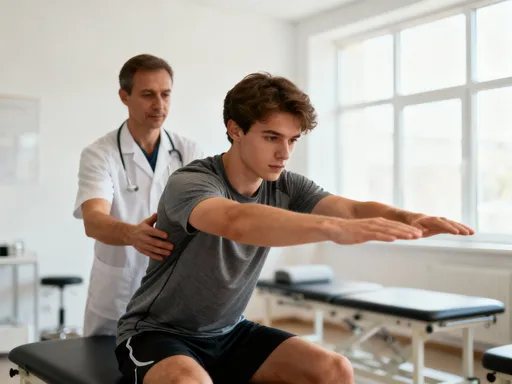
PNF stretching is a more advanced technique often used in physical therapy. It involves contracting a muscle against resistance before stretching it, which can lead to greater gains in flexibility. A common method is the “contract-relax” sequence: for example, lying on your back and pushing your leg against a partner’s hand for 5–10 seconds, then relaxing and allowing the leg to be gently stretched further. While PNF can be highly effective, it requires proper guidance to avoid strain and is best introduced with professional support.
Additionally, integrated movement practices like yoga and tai chi offer comprehensive approaches to flexibility and mobility. Yoga combines static and dynamic elements with breath control, promoting both physical and mental relaxation. Tai chi emphasizes slow, flowing movements that enhance balance, coordination, and joint range. Both have been shown in clinical studies to improve flexibility, reduce stiffness, and enhance quality of life, particularly in older adults.
Building a Sustainable Routine: Small Moves, Big Results
The biggest obstacle to flexibility training isn’t time or ability—it’s consistency. Many people believe they need long, intense sessions to see results, but research suggests otherwise. Just 10 to 15 minutes of daily stretching can lead to meaningful improvements in joint range and comfort. The key is regularity, not duration. Short, frequent sessions are more effective than occasional hour-long workouts because they provide consistent signals to the nervous system and tissues.
A sustainable routine integrates stretching into existing habits. For example, doing a few stretches after brushing your teeth in the morning, during commercial breaks while watching evening television, or as part of a bedtime wind-down. Linking stretching to familiar activities increases the likelihood of adherence. A simple sequence might include a seated forward bend for the hamstrings, a gentle spinal twist while sitting, and shoulder rolls to release upper back tension.
Focusing on major areas of stiffness—hips, hamstrings, lower back, and shoulders—can yield noticeable benefits. Tight hips are particularly common due to prolonged sitting and can contribute to lower back and knee issues. A basic hip opener, such as the figure-four stretch while lying down, can be done comfortably at home. Similarly, forward folds and cat-cow movements help maintain spinal flexibility, which is crucial for posture and daily function.
Progress may be subtle, but it’s measurable. Improved posture, easier movement, and reduced discomfort are all signs that the body is responding. Some people notice they can reach higher, bend deeper, or stand taller without effort. Others report fewer aches after household chores or gardening. These small victories add up, reinforcing the habit and making stretching feel worthwhile rather than like a chore.
Beyond the Stretch: Flexibility as a Lifelong Commitment
Flexibility training should not be viewed as a temporary fix or a pre-exercise ritual. It is a form of preventive care—a daily investment in long-term body maintenance. Just as brushing your teeth prevents dental decay, regular stretching helps preserve joint health and movement quality. The choices made today have a direct impact on how well the body functions in the decades to come.
Aging does not have to mean stiffness or loss of independence. Many of the mobility issues associated with older age are not inevitable—they are the result of years of inactivity and neglected flexibility. By making stretching a consistent habit, individuals can maintain the ability to perform daily tasks, enjoy physical activities, and live with greater comfort and confidence. The goal is not to achieve a perfect splits position, but to preserve the ability to move freely and without pain.
This mindset shift—from seeing stretching as optional to recognizing it as essential self-care—can transform one’s relationship with their body. It becomes less about appearance or performance and more about respect, gratitude, and stewardship. Every stretch is a small act of listening to the body, acknowledging its needs, and honoring its role in daily life.
In a world that often prioritizes speed and productivity, taking time to stretch is a quiet rebellion—a choice to slow down and care for oneself. It is a commitment to moving well, feeling well, and living well, no matter the number of years ahead. Flexibility is not just about how far you can reach; it’s about how fully you can live. And that makes it one of the most powerful tools for long-term health and well-being.