What I Learned Buying Equipment for My Business — A Real Cost Breakdown
When I started my business, I thought buying equipment was just about picking the right tools. I quickly realized it was way more complicated — and expensive. Hidden costs piled up, and I almost overspent by a huge margin. This is the cost analysis I wish I’d done before hitting “buy.” It’s not just about price tags; it’s about long-term value, financing trade-offs, and avoiding budget traps that can sink a new venture. What seemed like a straightforward purchase turned into a financial lesson that reshaped how I approach every business decision. The truth is, many entrepreneurs make the same mistake — focusing only on upfront cost while overlooking the full financial picture. This article breaks down exactly what I learned, step by step, so you don’t have to learn the hard way.
The Moment I Underestimated Equipment Costs
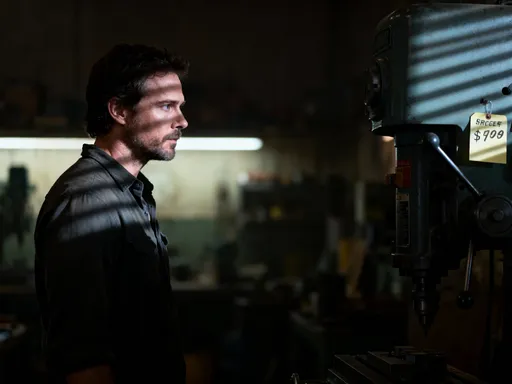
The first time I priced machinery for my small manufacturing setup, I focused only on the sticker price. I found a model that listed for $42,000 — within my budget, or so I thought. I celebrated the find, assuming I had done my due diligence. But within days, reality hit hard. The supplier informed me that delivery would cost an additional $3,200 due to the machine’s weight and required special handling. Then came the installation fee: $1,800 for a technician to calibrate and set up the unit properly. I hadn’t even considered that the machine would need operator training, which the vendor offered for $1,500. These weren’t optional extras — they were essential to making the equipment functional from day one.
By the time I added sales tax — another $3,500 in my state — the total had already climbed to nearly $52,000. That was 24% more than the base price. But the surprises didn’t stop there. A few weeks later, I learned the machine required a dedicated power circuit and reinforced flooring, which meant $4,700 in site preparation. Suddenly, what I thought was a carefully planned purchase had consumed nearly double the initial estimate. I had to delay hiring staff and postpone marketing efforts just to cover these unexpected costs. The emotional toll was real: frustration, self-doubt, and a sinking feeling that I might have jeopardized my business before it even launched.
What made this experience transformative was not the shock itself, but what I did next. Instead of blaming the vendor or writing it off as bad luck, I decided to dissect every component of the purchase. I created a spreadsheet that included every single cost, no matter how small. This exercise revealed a critical truth: the sticker price is only the entry point. Everything that happens before and after delivery contributes to the real cost of ownership. This moment became the foundation of a more disciplined approach to business spending — one rooted in foresight, planning, and financial realism.
Why Sticker Price Is Just the Beginning
Many entrepreneurs fall into the same trap: they see a number online or in a catalog and assume that’s the total cost. But in reality, the listed price is often just 70% to 80% of what you’ll actually pay. The remaining 20% to 30% comes from what the industry calls “soft costs” — fees and expenses that aren’t immediately obvious but are unavoidable. These include shipping, insurance during transit, customs duties (if importing), site preparation, installation, calibration, training, and initial spare parts. Ignoring these can severely distort your budget and strain your cash flow at a critical time.
Take shipping, for example. Large industrial machines are often shipped via freight carriers, and costs depend on distance, weight, and handling requirements. A machine that weighs over 5,000 pounds may require a liftgate truck, special rigging, or even a crane for unloading — each adding hundreds or thousands to the bill. Insurance is another often-overlooked necessity. If the machine is damaged in transit and you’re not insured, you could be on the hook for repairs or replacement before you’ve even used it. Then there’s site preparation: ensuring your facility has the right floor strength, ventilation, electrical capacity, and space layout. One client I spoke with had to pour a new concrete slab and upgrade their electrical panel, costing over $6,000 — all because the equipment specs weren’t reviewed early enough.
Taxes also play a significant role. In many U.S. states, sales tax applies to both the equipment and the delivery fee. Some states even tax installation and labor. This means a $50,000 machine could end up costing $57,000 or more after all fees and taxes. And if you need technicians to install or calibrate the machine — which is common with precision equipment — those labor charges can add up quickly. A single day of specialized labor might cost $1,200 or more. Training is another essential cost. Without proper operator training, you risk inefficiency, safety issues, and premature wear and tear. Some manufacturers include basic training in the package, but advanced or on-site training usually comes at an extra cost.
The key takeaway is this: always request a complete quote that includes all associated costs. Don’t accept a price that says “plus shipping and handling” without asking for a detailed breakdown. Many suppliers are willing to provide bundled pricing if you ask. And if they aren’t, that’s a red flag. A transparent vendor understands that business buyers need full visibility into total costs. By accounting for these hidden expenses upfront, you protect your budget and make more informed decisions. It’s not about spending less — it’s about spending wisely.
Financing: The Hidden Cost Multiplier
When cash is tight, financing seems like a convenient solution. You can get the equipment now and pay for it over time. But what many entrepreneurs don’t realize is that financing can dramatically increase the total cost of ownership. The monthly payment might look manageable, but the long-term financial impact can be staggering. I learned this the hard way when I signed a three-year lease for a $60,000 machine with monthly payments of $1,800. On the surface, that seemed affordable — just $21,600 per year. But after three years, I would have paid $64,800 — and I wouldn’t own the machine. At the end of the lease, I’d either have to return it, renew the lease, or buy it at a predetermined residual value, which in my case was $18,000. That meant a total outlay of $82,800 for a machine that originally cost $60,000.
What made this even more painful was discovering that the effective interest rate on the lease was over 11%, much higher than I had anticipated. Most leasing companies don’t advertise their interest rates clearly. Instead, they present the deal in terms of monthly payments, which makes it easier to overlook the true cost. I later compared this to a bank loan for the same amount at 6.5% interest over five years. The total repayment would have been about $69,000 — nearly $14,000 less than the lease option. And with the loan, I would own the asset outright at the end. The difference came down to one thing: understanding the full terms of the financing agreement.
There are valid reasons to lease instead of buy — for example, if you expect rapid technological changes or want to preserve cash flow. But leasing should never be chosen out of convenience alone. You must evaluate the total cost, including interest, fees, and residual value. Ask for the annual percentage rate (APR) and calculate the total payout over the full term. Also, watch out for hidden clauses: early termination fees, maintenance requirements, and restrictions on usage. Some leases require you to use only the manufacturer’s service technicians, which can be more expensive than independent providers.
Another factor is opportunity cost. The money you spend on high-interest financing could have been used for marketing, hiring, or product development. By choosing a more expensive financing route, you’re not just paying more for the machine — you’re losing the potential return on that capital elsewhere. The smarter approach is to compare all financing options side by side: cash purchase, bank loan, equipment loan, lease, and vendor financing. Each has trade-offs. A cash purchase eliminates interest but ties up capital. A loan builds equity but requires collateral. A lease preserves cash but offers no ownership. The best choice depends on your cash flow, tax situation, and long-term business goals.
Depreciation and Resale: Planning for the Exit
Every piece of equipment loses value over time — that’s depreciation. But not all machines depreciate at the same rate. Some hold their value well, while others become nearly worthless within a few years. This difference has a direct impact on your return on investment (ROI). When I bought my first production machine, I didn’t think about resale value. I assumed that if I ever needed to upgrade, I could sell it for a reasonable price. But when I checked the market two years later, I discovered that the model had dropped to less than 30% of its original value. A similar machine from a more established brand, however, was still selling for 60% of its original price. That difference represented thousands of dollars in lost equity.
Depreciation is influenced by several factors: brand reputation, demand in the secondary market, technological obsolescence, and maintenance history. Machines from well-known manufacturers like Komatsu, John Deere, or Haas tend to hold value better because they have strong support networks, widely available parts, and trusted performance records. Niche or lesser-known brands may offer lower initial prices, but they often depreciate faster because there’s less demand when it’s time to sell. Technology also plays a role. Equipment with proprietary software or outdated interfaces can become obsolete quickly, making it harder to resell.
Resale value isn’t just about the future — it affects your present decisions. If you know a machine will retain 60% of its value after five years, that effectively reduces your net cost of ownership. For example, a $100,000 machine that sells for $60,000 later means your real cost was $40,000 over five years — much better than a $90,000 machine that sells for only $22,500 (25% residual). This is why smart buyers consider total lifecycle cost, not just purchase price.
Trade-in programs can also influence your decision. Some vendors offer trade-in allowances toward new equipment, but these are often below market value. It’s usually better to sell the machine yourself through online marketplaces or industry auctions, where you can get a fair price. Keeping detailed maintenance records also helps — buyers are willing to pay more for equipment with a documented service history. By planning for the exit from the beginning, you turn equipment from a depreciating expense into a more strategic asset.
Maintenance, Downtime, and Operational Realities
A machine that runs reliably is worth far more than a cheaper one that breaks down often. Yet many buyers focus only on purchase price and ignore the cost of maintenance and downtime. I learned this the hard way when one of my key machines failed during a peak production week. The repair took four days because the technician had to order a specialized part. During that time, I couldn’t fulfill orders, lost $12,000 in revenue, and had to pay overtime to catch up afterward. The repair itself cost $2,800 — but the total financial impact was over $18,000. That single incident cost more than three months of lease payments.
Regular maintenance is not an optional expense — it’s a form of risk management. Most equipment comes with a recommended service schedule: lubrication, calibration, filter changes, and component inspections. Skipping these can lead to premature failure and void warranties. Some manufacturers require documented maintenance to keep warranties valid. Preventive service contracts can help, but they come at a cost — typically $1,500 to $5,000 per year, depending on the machine. While that may seem high, it’s often less than the cost of one major repair or a week of downtime.
But not all service contracts are created equal. Some include only basic labor, while parts are billed separately. Others have response time guarantees, which can be critical for time-sensitive operations. I once had a contract that promised 24-hour service — but only during business hours, and only on weekdays. When a breakdown happened on a Saturday, I had to wait until Monday, losing valuable production time. Now, I carefully review service terms and prioritize vendors with strong local support networks.
Downtime is the hidden killer of profitability. Every hour a machine sits idle, you’re losing revenue, delaying customer orders, and potentially damaging your reputation. The cost of downtime varies by industry, but studies suggest it can range from $100 to $500 per hour for small to mid-sized operations. For high-volume businesses, it can be much higher. The best defense is a combination of preventive maintenance, spare parts inventory, and fast access to skilled technicians. Treating maintenance as a core operational cost — not an afterthought — is essential for long-term financial health.
Total Cost of Ownership: The Framework That Changed My Decisions
After my early mistakes, I developed a simple but powerful tool: a Total Cost of Ownership (TCO) model. Instead of looking at purchase price alone, I now evaluate every equipment decision through a broader financial lens. The TCO framework includes four main components: acquisition cost, operating cost, maintenance cost, and disposal value. By estimating each of these, I can compare machines more accurately and choose the one that delivers the best long-term value.
Here’s how it works. For acquisition, I include the purchase price, taxes, shipping, installation, and training. For operating costs, I factor in energy consumption, labor, and consumables like blades, filters, or lubricants. Maintenance includes scheduled service, repairs, and downtime risk. Disposal value is the estimated resale or trade-in price after a set number of years. When I applied this model to two similar packaging machines — one priced at $85,000 and another at $98,000 — the results were surprising. The more expensive machine used 15% less energy, required less maintenance, and had a projected resale value of 58% after five years. The cheaper model depreciated faster and had higher service costs. Over five years, the TCO of the pricier machine was actually 32% lower.
The beauty of TCO is that it doesn’t require complex financial modeling. You don’t need an MBA to use it. It’s about asking better questions: How much will this really cost over time? What are the hidden expenses? How will it affect my cash flow and profitability? By using this framework, I’ve avoided several costly mistakes and made more confident purchasing decisions. It’s shifted my mindset from “How cheap can I buy?” to “How much value can I get?” That small change in perspective has had a big impact on my business’s financial stability.
Smart Procurement: Balancing Risk, Return, and Reality
Procurement is not just about spending money — it’s about making strategic investments. Every equipment purchase should be evaluated not only for its immediate utility but also for its long-term financial impact. The goal isn’t to minimize cost at all costs, but to maximize value while managing risk. This means balancing upfront price with reliability, support, lifecycle performance, and financial flexibility.
One of the biggest risks is over-leveraging — taking on too much debt or lease obligation early in the business lifecycle. While it’s tempting to acquire all the equipment you think you’ll need, it’s wiser to start with what you need now and scale gradually. This protects your cash flow and gives you room to adapt as your business evolves. Another risk is technological obsolescence. Buying cutting-edge equipment might seem forward-thinking, but if it becomes outdated in three years, you could be stuck with a costly, underperforming asset. Sometimes, a proven, slightly older model is the smarter choice.
Support and service availability are also critical. A machine is only as good as the network behind it. Can you get parts quickly? Is there a technician nearby? Does the manufacturer offer training and troubleshooting help? These factors affect uptime, efficiency, and long-term costs. I now prioritize vendors with strong local presence and responsive customer service, even if their prices are slightly higher.
Finally, procurement should align with your business strategy. If you’re in a high-growth phase, you might prioritize scalability and speed. If you’re focused on stability, reliability and low maintenance may be more important. The key is to treat each purchase as a financial commitment that affects your balance sheet, cash flow, and operational capacity. By doing so, you move from reactive spending to proactive investment. This mindset shift doesn’t just save money — it builds a stronger, more resilient business.
Beyond the Purchase Button
Buying equipment is one of the first major financial decisions an entrepreneur makes. But it’s not just about what you pay — it’s about what you keep. The real cost of a machine isn’t just the number on the invoice; it’s the sum of every dollar spent, every hour of downtime, every repair, and every opportunity lost or gained. By analyzing costs fully, planning for the long term, and treating every purchase as a financial commitment, you build a stronger, more resilient business. The tools you buy today shape your operations, your profits, and your future growth. The real return isn’t in the machine — it’s in the wisdom you gain. And that wisdom is the most valuable asset of all.